Fryeburg Fair
Bag of BonesThe Fryeburg Fair functions as a passage into the past, carrying Mike and Kyra from the lakeside present into a crowded version of the fair around 1900. Its importance is not only that Mike sees Sara Tidwell and the Red-Tops alive and performing: Kyra shares the experience, and later recalls details that confirm the visit was not simply Mike’s private dream. The fair is at once a public celebration, a historical landscape, and a threshold where observation gives way to participation.
A Fairground Across Time
Mike approaches through sounds that gather before the fair itself comes into view: a sideshow barker’s call, the merry-go-round’s steam-driven calliope, the shooting gallery, and the music of guitars and double bass. Familiar fair aromas and the prospect of seeing Sara perform draw him onward. The scene is populated by ordinary amusements and spectators, but its historical displacement is already clear to Mike: Sara is present, although she and the Red-Tops had left long before Royce Merrill was born in 1903.
The route toward the grounds passes the former Washburn place, which is no longer there, and rises by broad wooden stairs along the eastern side of The Street. At the top, a wooden arch announces both “WELCOME TO FRYEBURG FAIR” and “WELCOME TO THE 20TH CENTURY.” Its signs make the passage literal: the fair is marked as a new century, but Mike understands that he has reached a time before the one he came from. People walking beneath the arch briefly become gauzy, skeletal figures before disappearing, making the threshold as unsettling as it is inviting.
Mike hesitates at the arch. He fears not only dying or vanishing but being unable to return, trapped forever as a visitor to the turn-of-the-century fair. What finally draws him across is the prospect of seeing Sara Tidwell sing with his own eyes. Crossing changes the quality of the experience: what had seemed distant and nostalgic becomes immediate, and Mike feels the difference between looking through a window and being inside the scene.
The Fair in Full Activity
Beyond the arch, Mike moves through a busy fairground whose details establish it as a social world rather than a mere backdrop. There are exhibition barns with cows and sheep, a shooting gallery, ring toss, penny-pitch, food stalls, a Ghost House, and a strength-test pole whose markings range from “BABY NEEDS HIS BOTTLE” to “HERCULES!” He passes these attractions almost without noticing them, absorbed in the search for the music and the performers.
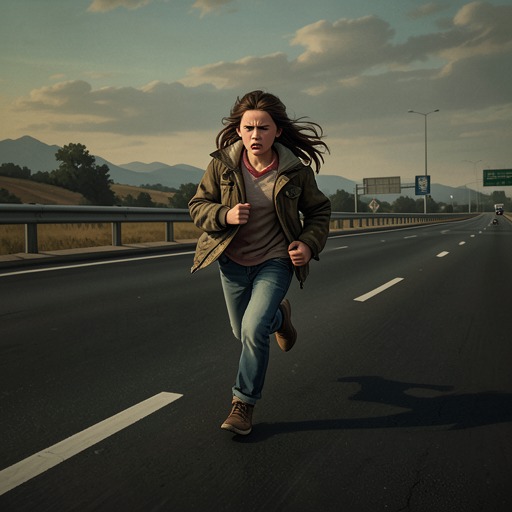
At the stage by the Ferris wheel, he finds Sara at the front of a group of roughly eight to ten Black performers. She is alive and in her prime, singing and playing guitar. The moment fulfills the desire that drew Mike across the arch, but the fair’s historical recreation does not stay confined to his experience: Kyra runs up behind him, dressed in a white sailor dress and straw hat with a navy-blue ribbon, carrying her stuffed dog, Strickland. Mike catches her and steadies her hat. The familiar, confident gesture places their present-day bond inside the impossible historical setting.
The Encounter and Its Threat
The fair’s passage through time also exposes Mike and Kyra to danger. A line of jackboys spreads across the midway, cutting off the way back to the arch and The Street. At its center is an old man resembling Max Devore, who demands that Mike give Kyra over. Mike recognizes the resemblance but also knows the figure is not Max: the face is subtly different. The encounter brings the custody conflict into the fair’s strange temporal world, with a historical-looking figure repeating the threat of separation even though the dead Max himself is not present.
The obstruction makes the arch more than a route into the past; it is also the way back, and the group’s presence blocks it. The fair’s pleasures and spectacles thus sit beside a concrete struggle over whether Mike can keep Kyra with him and escape. Their later recollection preserves the fair’s specific attractions—the snake-dance performers, the strength-test pole, and the spooky house—alongside an incident in which Mike falls into a barrel. The recalled details give the visit the texture of a shared event, not just a vague impression.
Shared Memory and Lasting Significance
Afterward, Mattie tells Mike that Kyra wants to speak to him because she says the two of them went to the Fryeburg Fair the previous night. Kyra tells him that she found him there and later supplies details about the attractions they visited. When she asks whether it was a dream, Mike chooses not to dismiss her account. He responds by remembering her hat and dress; she is relieved and continues describing what happened. Mattie then playfully asks whether Mike remembers his date with her daughter, underscoring that Kyra’s recollection has made the visit a shared point of connection between them.
The fair continues to shape Mike’s sense of place and time. During a later walk near Tidwell’s Meadow, he thinks that he and Kyra really had visited a version of the fair in 1900. He imagines the Red-Tops near their cabins, with their music and lanterns, and hears the past as something almost present rather than sealed away. The fair’s significance lies in that collapse of distance: it begins as a destination Mike longs to see, becomes a place where the past can be entered and its dangers confronted, and remains proof that time at Dark Score Lake is not as firmly closed as ordinary experience suggests.